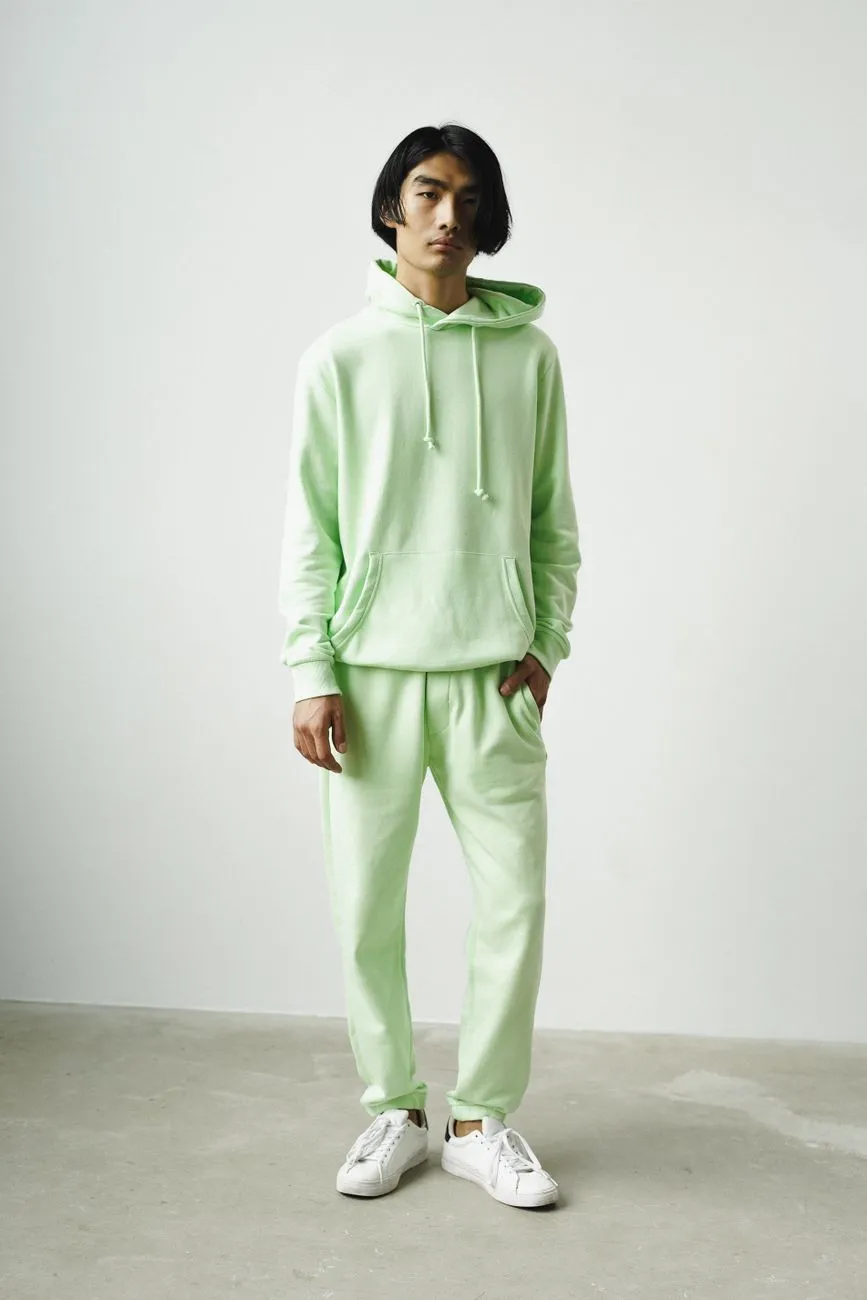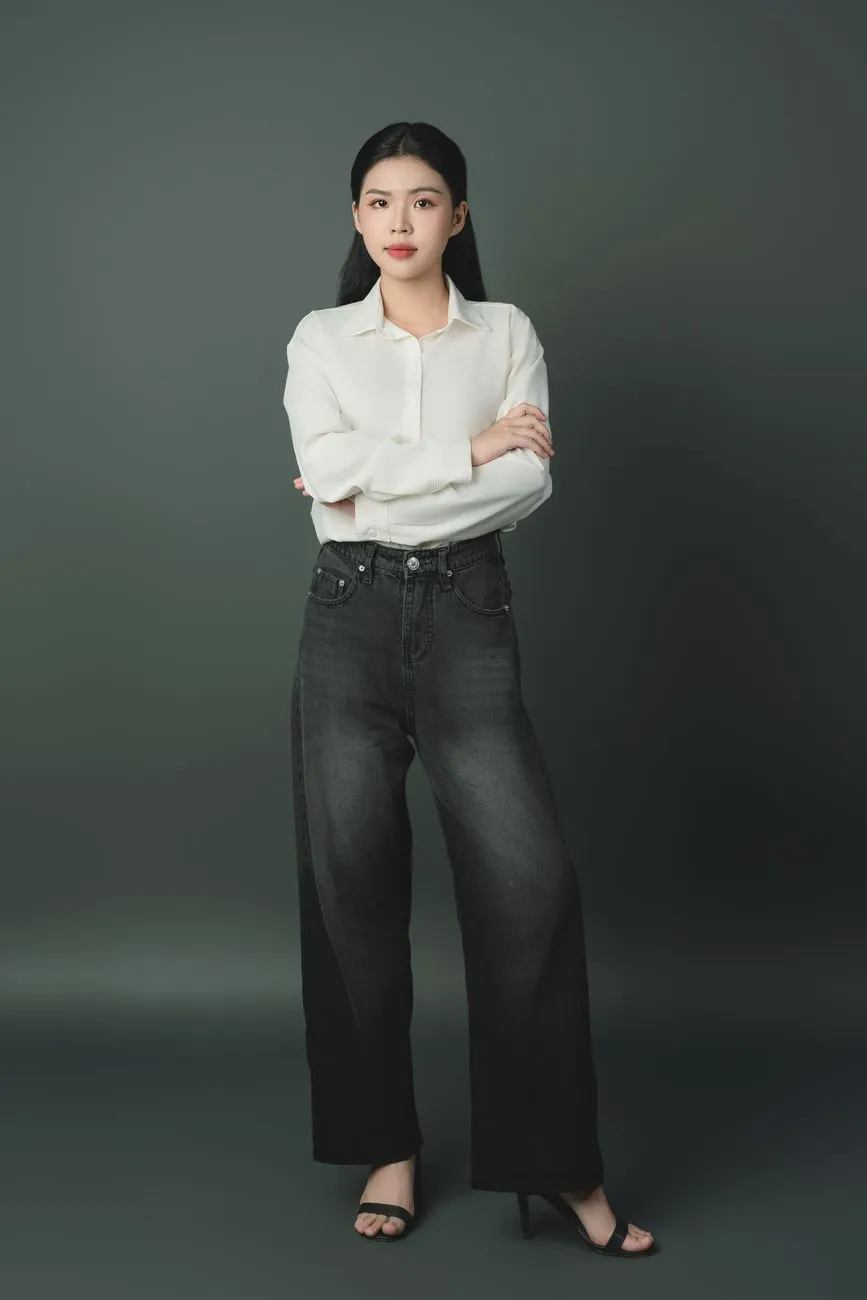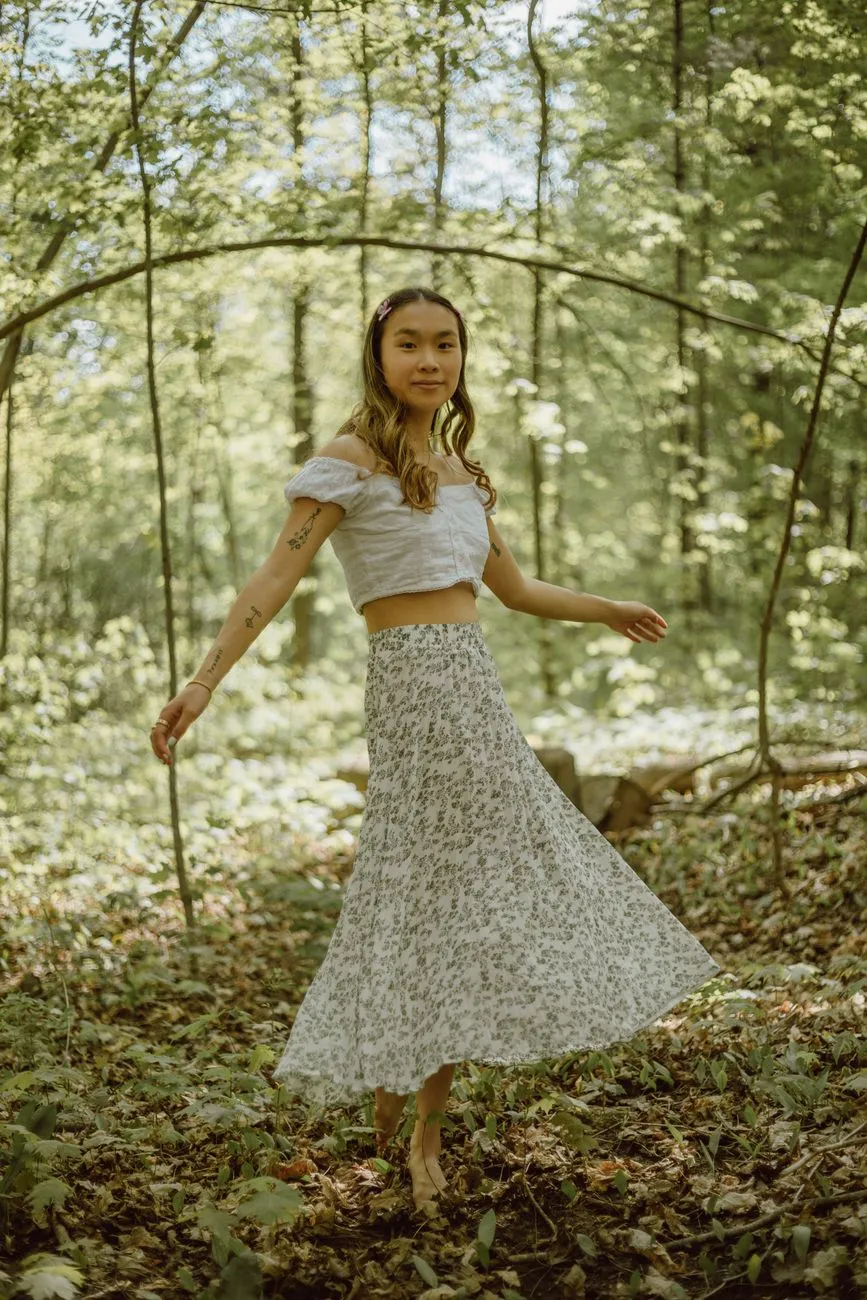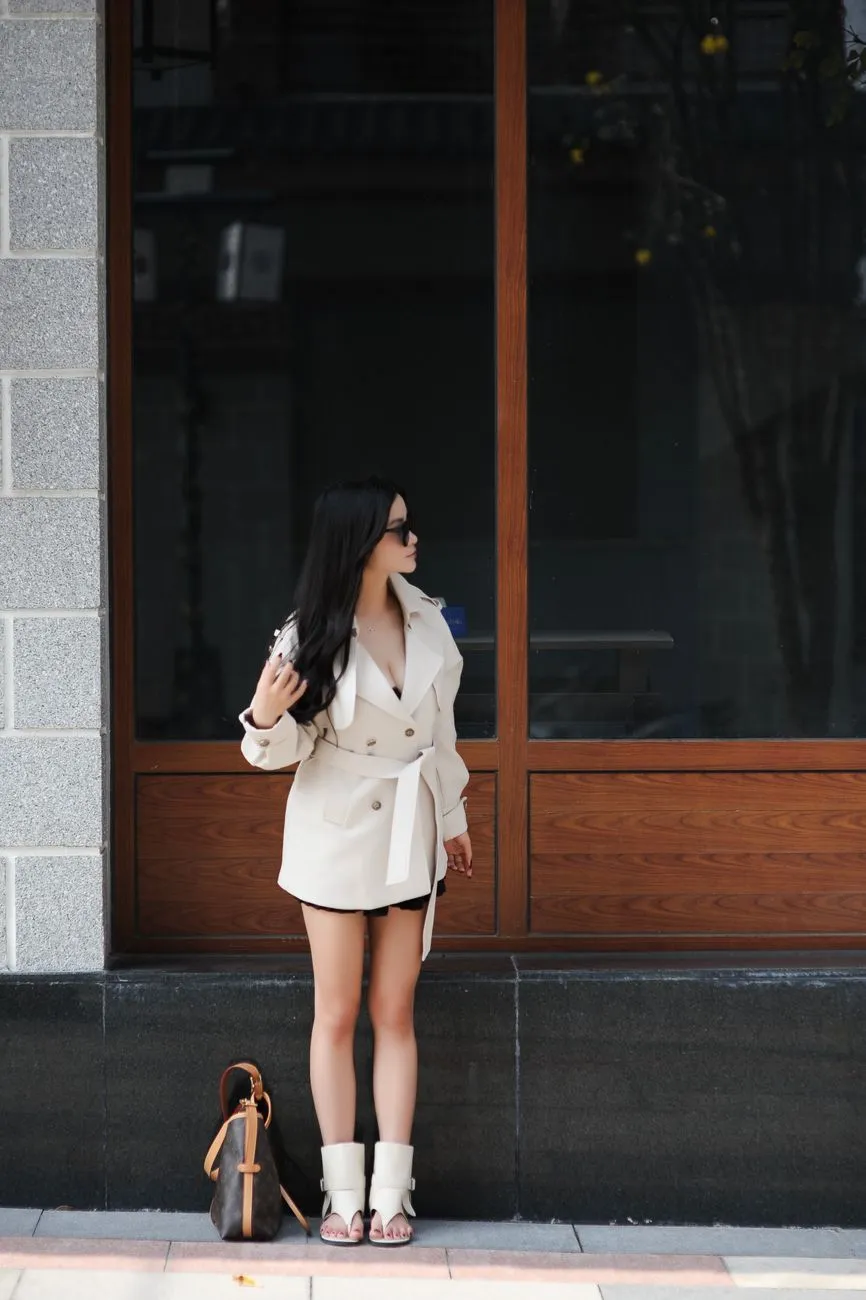
A rectangle body shape (also called an H-shape or straight shape) is when your shoulders, waist and hips are roughly the same width and the waist is not strongly defined. It comes with a big advantage: relaxed fits, oversized pieces, sportswear, suits and straight shirts all look great on it. If you want your silhouette to look softer and curvier, the key is to create a waist with your clothes, using belts, cuts, volume and colour so the eye reads a waistline.
This guide helps you recognise a rectangle shape, understand the principles behind rectangle body shape outfits, and gives you ready-made formulas for both women and men.
How to tell if you have a rectangle body shape
Stand straight in front of a mirror in fitted clothes, or take a straight-on full-length photo, and look for:
- Shoulders and hips about the same width: neither is clearly wider.
- A less defined waist: from bust to hip is a fairly straight line, and the waist is only slightly narrower than the hip.
- Clean lines: the body tends to look balanced, with straight arms and legs.
Rectangle shapes appear at every height and weight: slender, athletic and fuller bodies can all be rectangles. If your hips are clearly wider than your shoulders, you may be closer to a pear body shape. If you are quite slender and want to look a little fuller, the guide on how to dress a slim build adds more tips.
Core principles for a rectangle shape
Create a waist with belts and cuts
- Belt it: coats, dresses, long shirts and even blazers can be belted at the waist. Medium-width belts suit smaller frames; wide belts suit taller people or heavier coats.
- Peplum tops: the flared hem below the waist makes the hips look fuller and the waist narrower.
- High-rise trousers and skirts: a high waistband marks where your waist is.
- Darts and diagonal seams: dresses with waist darts, wrap dresses and tops with diagonal cuts all suggest curves.
Add volume at the shoulders or hips
When the top and bottom have a bit more volume, the waist in between looks smaller. It is simple contrast:
- Up top: puff sleeves, yokes, padded shoulders, ruffled necklines, boat necks.
- Below: pleated skirts, flared skirts, tiered skirts, pleat-front wide-leg trousers, pleated-waist trousers.
Use colour to draw curves
- Colour-blocking: darker side panels with a lighter centre (common in dresses) create the illusion of a narrower waist.
- Contrasting belts: a black belt on a light dress, or a tan belt on an all-white outfit, marks the waist clearly.
- Open jackets: a light top under a darker open jacket; the two vertical panels make the middle look narrower.
Pick fabrics with drape or structure
Soft, drapey fabrics (silky weaves, chiffon, heavier jersey) follow the body and gather nicely at the waist when belted. Structured fabrics (twill, chino, wool) hold the shape of peplums, pleats and shoulder pads. Both help build shape, just in different ways.
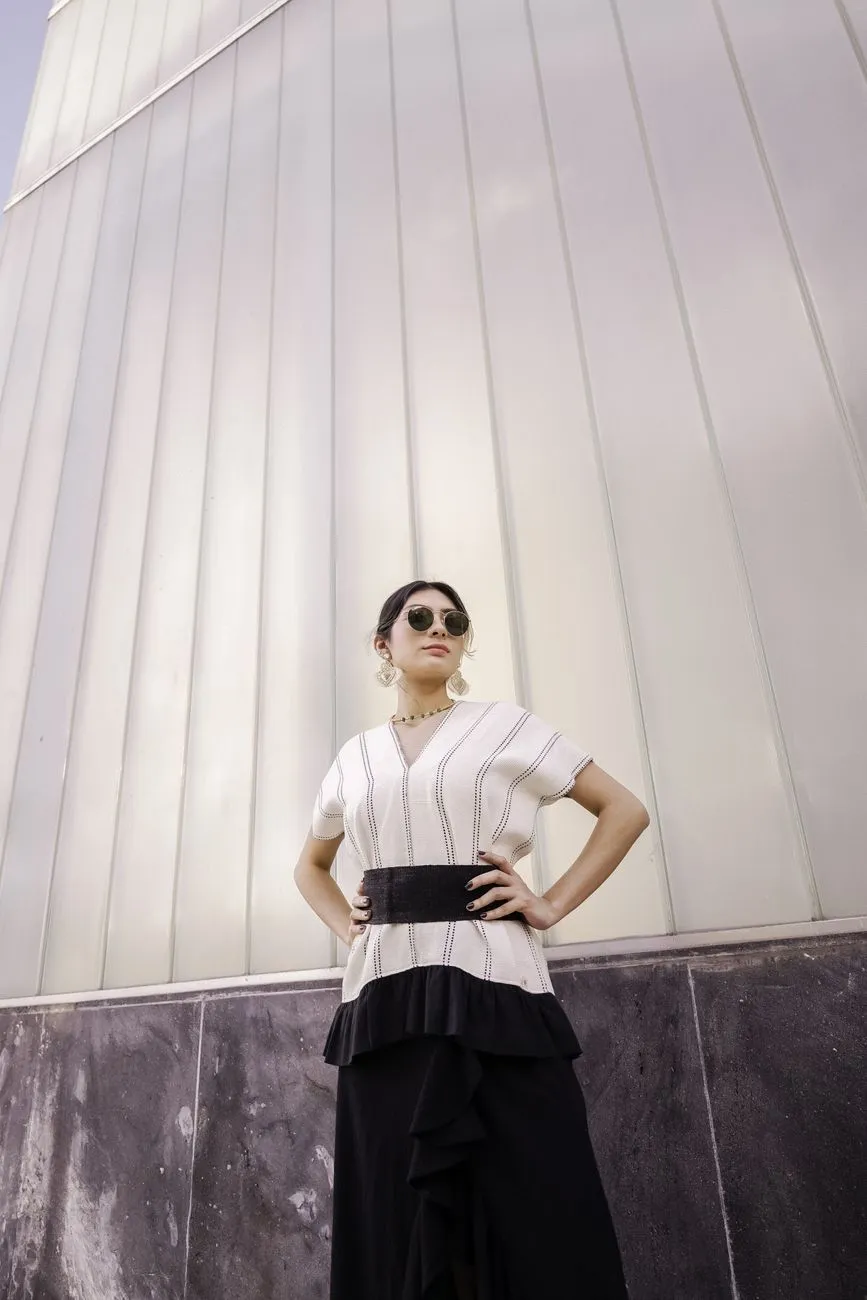 Photo: Willy Méndez / Pexels
The best pieces for a rectangle shape
Tops
- Peplum, babydoll and puff-sleeve tops.
- Wrap tops that tie at the waist.
- Cropped, waist-length tops with high-rise bottoms.
- Tucked-in shirts with a little blousing above the waistband.
Trousers
- High-rise, pleat-front wide-leg trousers.
- Paperbag trousers (gathered waist with a tie) that add gathers right at the waist.
- Flared trousers: width at the hem to balance padded shoulders.
Skirts
- Pleated, flared and tiered skirts.
- High-waisted A-line skirts.
- High-waisted pencil skirts with a tucked-in top, when you want something polished.
Dresses
- Wrap dresses: the diagonal wrap creates a natural curve at the waist and bust.
- Fit-and-flare dresses: fitted on top, flaring from the waist.
- Belted shirt dresses: a straight dress plus a belt becomes an X-shape.
- Dresses with waist cut-outs or darts if you like a modern look.
Jackets
- Belted trench coats and blazers with a nipped-in waist.
- Cropped jackets that end at the waist.
- Bombers and short denim jackets with a ribbed hem: the hem gathers in and lets the top half blouse slightly.
Outfit formulas to try
1. Short belted trench + pleated skirt
The belt creates a waist, the pleated skirt adds movement and volume below. Great for work or cool-weather weekends.
2. Babydoll top + high-rise jeans
Gentle volume on top, a high waistband to mark the waist. Tuck the top in just enough to show the waistband.
3. Wrap dress + delicate strappy sandals
The wrap creates the curve, light sandals keep the whole look airy.
4. Cropped top + pleat-front wide-leg trousers + open jacket
The crop shows the high waistband, wide legs add shape below, and an open jacket adds vertical lines on either side.
5. Loose shirt tucked in + A-line skirt + belt
An easy office formula: the shirt blouses slightly above the waistband, the A-line skirt flares out, and the belt marks the waist in between.
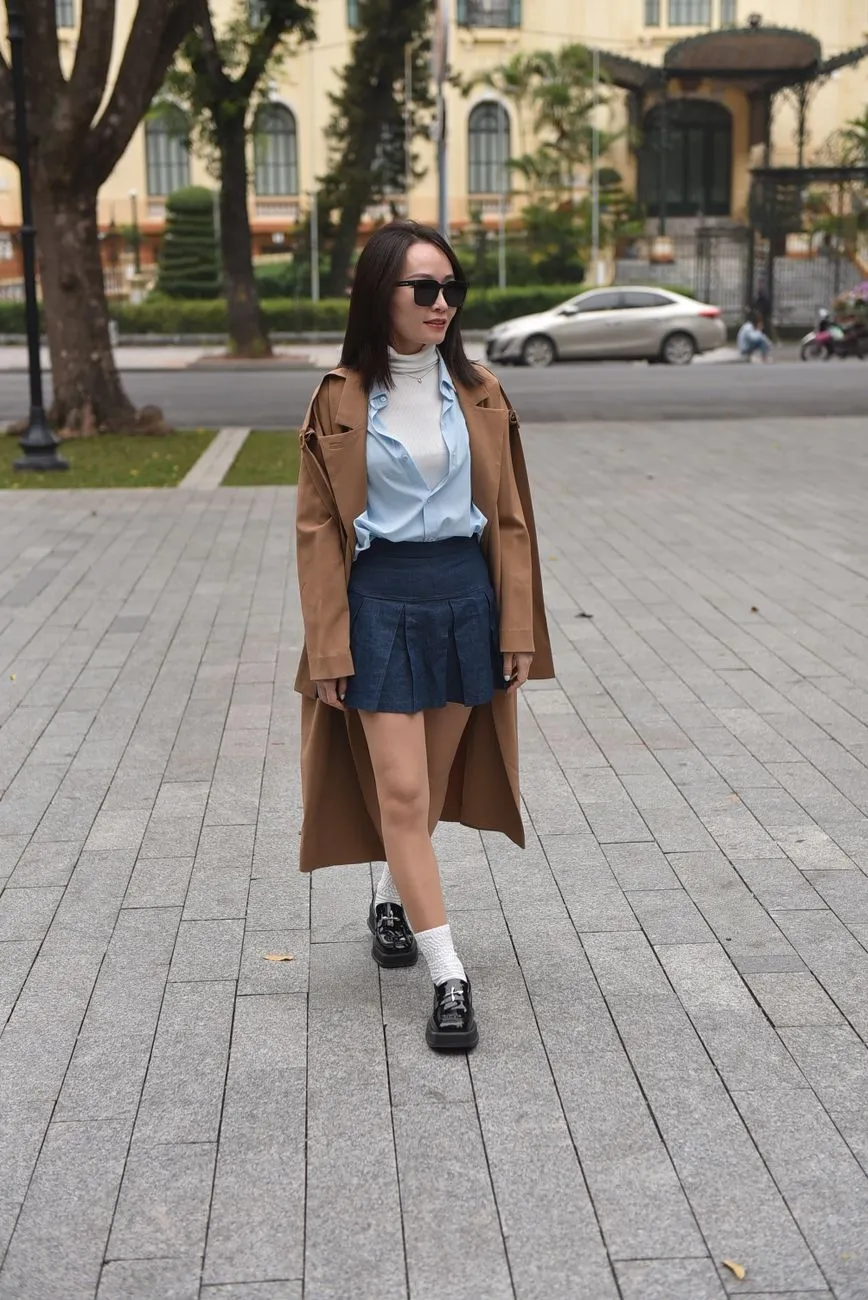 Photo: Felix Young / Pexels
Tips for men with a rectangle build
For men, a rectangle build (shoulders and hips about the same width) is very common. The usual goal is to make the shoulders read a little broader for a subtle V-shape:
- Structure at the shoulders: jackets with yokes, lightly padded blazers, denim jackets, bombers.
- Horizontal stripes or colour-blocking across the chest: adds width up top.
- Straight or slightly tapered trousers: keep the lower half neater than the upper half.
- Layering: a tee under an open shirt or a jacket adds depth to the upper body.
- Polos and shirts that fit at the shoulder: the shoulder seam should sit at the shoulder point, not drop onto the upper arm.
Pieces that make the silhouette look straighter
Nothing is off limits. Straight, relaxed clothes look great on a rectangle shape; that is one of its strengths. This section is only for when you want more curve:
- Unbelted shift dresses past the knee, in one colour head to toe: one straight, continuous block.
- Boxy cropped tops with straight-leg trousers in the same tone: nothing for the eye to read as a waist.
- Long tops left loose at the hip, untucked and unbelted: they hide the waist position.
- Very thin, clingy fabrics without details: they cannot build volume at the shoulders or hips.
Try it on before you buy
Belt position, skirt flare and sleeve volume work very differently from person to person. A wrap dress that creates a clear curve on one body can feel a bit loose on another.
Before you order, you can try the piece on your own photo with Macgi: upload one full-body photo, pick a top, a top with trousers, or a dress, and see the result in about 15–40 seconds in your phone browser. The AI only changes the clothes and keeps your face, body shape, skin tone, pose and background, so you can compare styles on your real proportions. Try-on images are AI-generated previews, and sizing still depends on the store’s size chart. If you want to know how close the preview is to reality, read is AI try-on accurate?.
FAQ
Should a rectangle shape wear oversized clothes?
Yes, oversized clothing is one of this shape’s strengths. If you want a hint of curve, add a waist detail: a belt, a front tuck, or an oversized top with high-rise trousers.
Wide belt or skinny belt for a rectangle shape?
Both work. Skinny belts suit lighter dresses and smaller frames; wide belts suit heavy coats, wool dresses and taller people. What matters most is placing it at your natural waist, the narrowest point of your torso.
Can a rectangle shape wear bodycon dresses?
Yes. Choose one with darts, darker side panels, or shoulder and neckline details to create a focal point.
How do I know if I’m a rectangle or a pear?
Compare your shoulders and hips. If they are about the same width and the waist is not strongly defined, you are closer to a rectangle. If your hips are clearly wider than your shoulders, you are closer to a pear.